Tuesday, September 27, 2005


Leeds Metropolitan University: Civic Quarter (right side). View from a parking structure over Leeds downtown towards southwest. Posted by Picasa

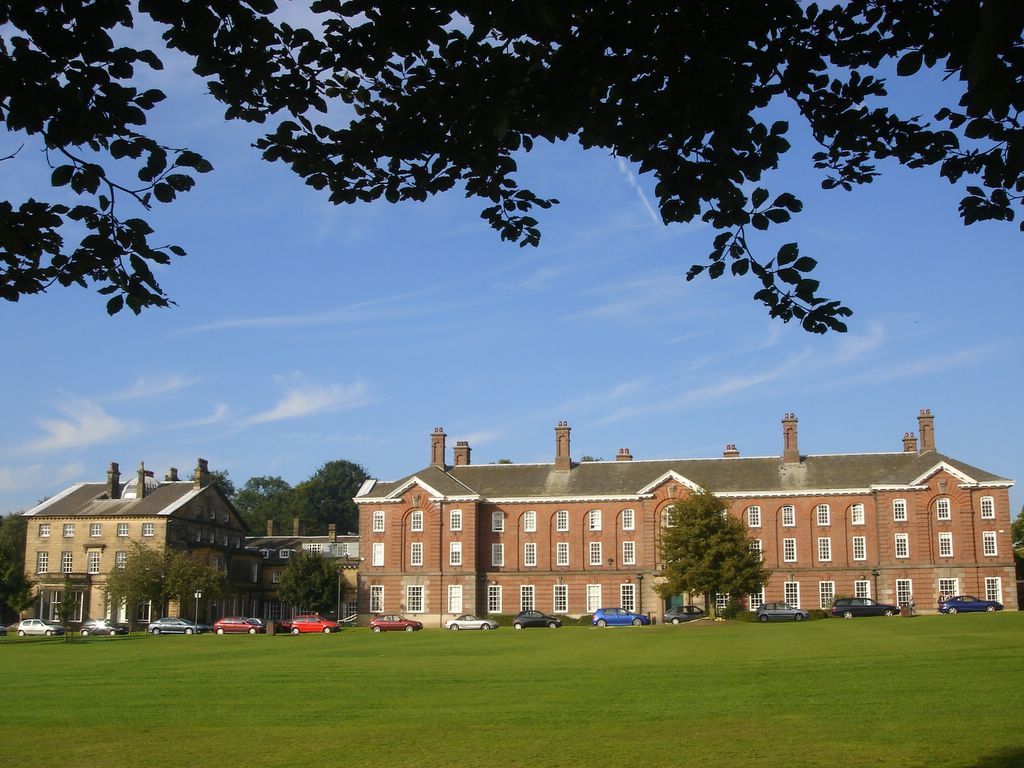
Leeds Metropolitan University: Beckett Park campus, with oldest building (left side): "The Grange". Posted by Picasa

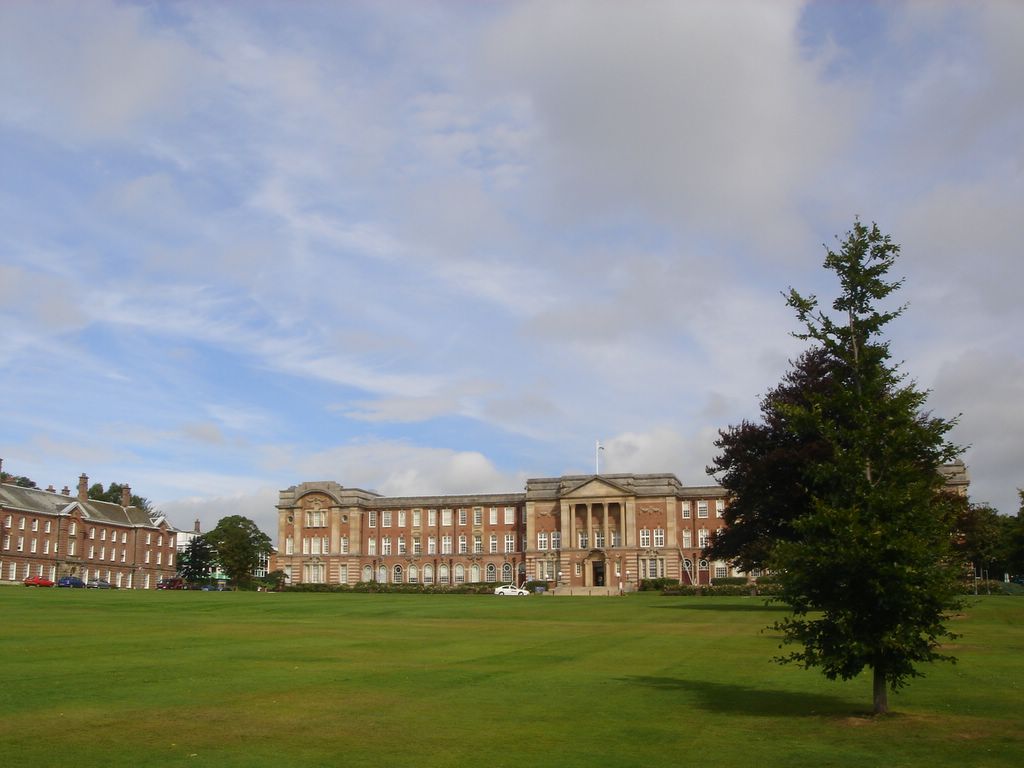
Leeds Metropolitan University: The Beckett Park campus is in a U-shape around a large green "acre", with the imposing James Graham Building at the top. Posted by Picasa

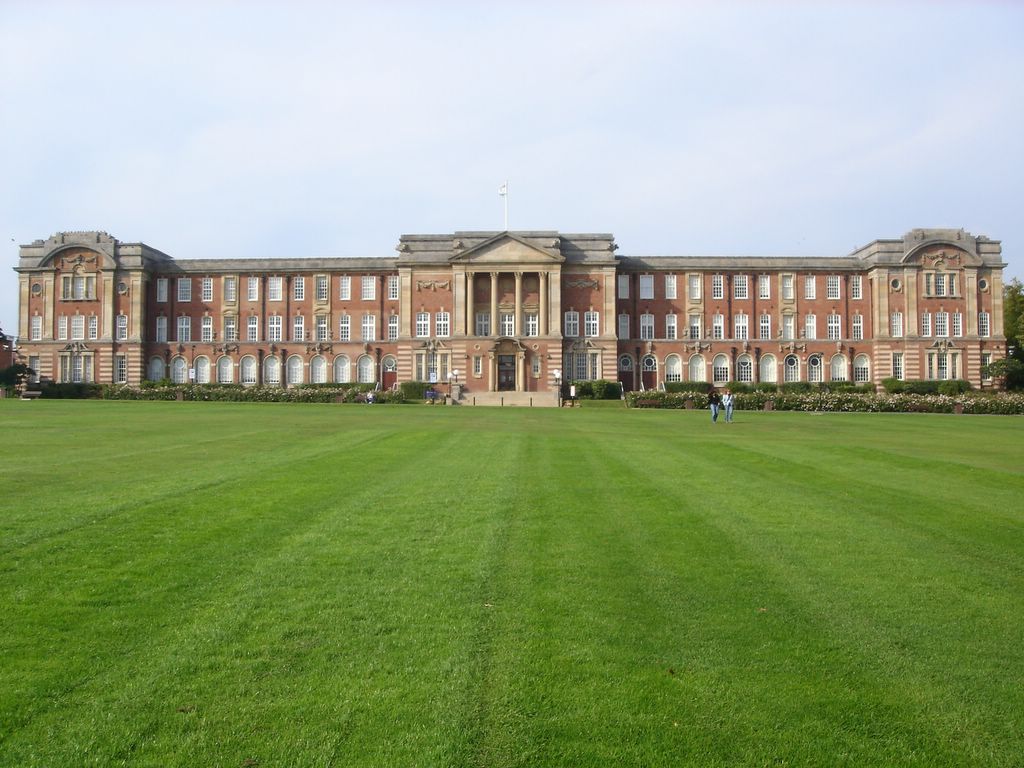
Leeds Metropolitan University: James Graham Building at the Beckett Park Campus in Headingley. Posted by Picasa

Tuesday, September 13, 2005

Disaster in New Orleans and Surroundings

It just happened when I began my travel. During a stopover at the Detroit airport on Monday, August 29, I watched on CNN the reporting about the developing storm Katrina. It looked like it would miss New Orleans itself, and it already calmed down from a category 5 storm. So as I continue my travel, I was convinced that the worst is over. But after my arrival in the UK, I watched on BBC News the horrendeous events that were unfolding in the US South.

Therefore, before I will write about my travel and the arrival at a new place of living, my sympathy goes to those who suffered terrible losses in this disaster. I do here not want to assign blame and suggest what could have been done better - this already is a subject of discussion and will hopefully lead to consequences. But I want to espress my hope that New Orleans and the surrounding towns will rise again to their former beauty. In many parts of the world, regions have always recovered from disaster. And the strong spirit of the Southerners will lead to rebuilding an revitalization of this coastal area that is now so devastated. My best wishes to you there!

Monday, September 12, 2005

Getting life organised - car

Monday I joined the AA and phoned in for an insurance quote. Arranged everything over the phone. Tuesday I returned the rental car, and now I am on my own. No more safety net - now I really have arrived.

Now the trouble starts...

Wednesday, I play with the electric windows; then the rear right window does not move up anymore. In the evening I remove the door panel to access the interior parts of the window mechanism, but no use - I cannot lift up the window manually.

On weekend I find the equivalent of the US Pep Boys: Halfords. What a relief - now I can browse for all these car goodies. I find a few things: voltmeter, wires, clamps. Fully equiped, I now tackle the electrical issue. Turns out that the motor of the window works fine. I am able to wind it up again by connecting the motor directly to the electric power. Then I disconnect it - I will tackle this problem at a later time and repair the window switches then. For now, the right rear window is simply just disabled.

A few other things do not work at this car: some of the switches on the dashboard do not have a background illumination - so at night I do not see some of the settings there. The right mirror motor does not pull the mirror in the vertical direction - I have to adjust that by hand. The interval wiper setting does not work: the front wipers do not operate at all in the interval setting, and the rear wiper does something weird, whenever it thinks it should - and then stays in an arbitrary position. No huge problems, just minor annoyances - and I am willing to deal with them, for that great price.

Monday, September 05, 2005

Getting life organised - buying a car

An important issue for settling in to a new place is transportation, how to get around to places. In Leeds there is a very extensive inner-urban bus network and a nice commuter train connection to the outer towns, but for going shopping or exploring the countryside, one needs a car. Since I had 4 suitcases + a box when I arrived at Leeds-Bradford airport (LBA), I already had reserved a rental car - no way that I would be able to deal with these luggage pieces on a regular bus.

But car rental is expensive, and although I planned on using the rental car for the first days, I intended quickly to get a car, so that I could return the rental car as soon as possible. Also, this rental car has a stick shift transmission - which is a bit of a problem for me. Not that I cannot use it - I learned to drive on a stick shift, and one can drive much more sporty with it. But here in the UK driving with a stick shift is one additional hazzle: driving on the left side, after I had driven the past 24 years on the right side, is a bit difficult. This also means that the gear shifter is on the left instead of on the right - and my have to swap my complete behavior pattern in terms of what each hand is doing while I stear the car. And third, I am not yet familiar with the Leeds traffic and road network - so I am constantly looking at traffic signs and directions. This all adds up to making driving quite difficult, and I could not wait to return the rental car and get a car with an automatic transmission, which made cruising so enjoyable while I was in the US.

Thanks to the global connection through the internet, I already had explored the possibilities of a car purchase on the web. The site Auto Trader offered a nice overview on used cars, from private owners and from dealers (trade). My price rance was not yet determined, but to save valuable cash which I would need before my first salary arrived, I intended to set a quite low limit.

I had a few criteria that I would like to be fulfilled:
- the car should be British. This is because I want to "dive in" and get the full experience of living in Britain. In the US, I had my monster US classics, and was very happy with them. I thought that I would be able to apply all my acquired mechanical knowledge in dealing with possible unreliabilities...
- the car should be a Diesel. Gas prices in Europe and the UK are more than double as what they are in the US, where now everyone is complaining about 3$ per gallon. In the UK, gas prices approach 1 British Pound per litre, which is about $6.50 per gallon at the current US conversion rate. Diesel engines have a very good mileage of usually around 50 mpg, so that would keep the operating cost down.
- it should be an automatic. Although I am able to drive stick, it bothers me to take constantly the hand of the wheel, take that stick, and move it forward or backward. And this with the left hand which never had to do anything before (when I was driving in cars with steering wheel at the left side).
- it should be a station wagon or hatchback (or estate, as they call them here), because I often carry a lot of stuff with me.
- it should have a sun roof. A convertible does not seem feasible because of the climate here.
- it should be cheap.

When looking on the web for cars that would fulfill these conditions, I realized that it would be hard to find one that satisfies all of them. Especially the combination Diesel-automatic was hard to find, so I decided that I would have to be a little less discriminative.

I finally found one that would satisfy 5 of these 6 conditions: a 1996 Rover 820 Fastback. Automatic, a hatchback, British, with sun roof and a few other luxury extras, and a reasonable price of 575 GDP. Yes, I really aimed at quite a low price.

When I called, I hardly understood the heavy Yorkshire dialect of the seller. But I managed to arrange for a meeting. Calling the next day, however, I learned that in this particular car the gear box had broken. What a shame. But the same dealer offered a few other cars, and so I decided to stop by. I test drove another Rover, but that was not a hatchback. Then they also had a 1993 Ford Granada stationwagon. I drove it, and it felt ok. 350 cash. I decided to take this, although this would not be the unique British car experience that I had sought. So on Sunday afternoon, 5 days after my arrival in the UK, I became proud owner of my first car in the UK.

A bit rust around the wheels, but the engine seemed ok. I immediately started cleaning the interior from the dust.

This is what a car for 350 GBP looks like. Posted by Picasa

Sunday, September 04, 2005

Moving to a new country

This does not happen every day that one is moving to a different country, to different continent. Still, nowadays, this seems not to be anything extrodinary any more. Imagining, how it must have been 200 years ago ..., breaking any connections with the past, a real adventure. No communications to back home, one probably would not see the relatives anymore who stayed back.

100 years ago, such a moving was already not so final, with steam ships around, telegraph connecting the continents, allowing a connection back to home.
And nowadays, with internet and globalization, all the adventure in moving has gone. It almost feels like a routine thing. The same shops are now anywhere in the world; Costco (US, UK), Ikea (US, UK), Staples (US, UK), Borders (US, UK), ... are everywhere. Through the internet, news and information about any place can be obtained anywhere (at least on this side of the "digital divide").

Electric power is different (110V in US, 240V in UK), but most electronic devices nowadays come with multiple input voltages, allowing an automatic use at whatever power is available. The only thing that needs to be bought is the right cable to plug into the sockets. Due to international standardization, this is no proplem (3-prong power cables are standard everywhere, they come with various plugs for each country).

So moving does not seem to be anything special, no break in customs or habits seems to be necessary. But still, there are numerous little things that one needs to consider when moving abroad. One of the most important is how to transfer money so that initial expenses can be covered. I decide to take travellers checks, for an initial deposit into a bank account in the foreign bank. So one of the very first steps after my arrival inthe UK would be to open a bank account. Then to get a cell phone, to be reachable. With a good plan for international calls. Then of course buy a car, to get around. All these expenses may quickly drain the initial deposit.

Fortunately in my own situation, I do have a bank account in Germany, with a small leftover from more than a decade ago. And within the European Union, it is no problem to electronically transfer money from one bank account to another, free of charge, even to another country. Yes, banking in Europe seems to be so much more advanced than banking in the US, where still these awkward paper checks are routinely used, and where it costs a fortune to transfer money from one account to another through a "wire transfer", even within the US. There is only this version of a "direct transfer" with ACH which is for free in the US, but rarely anyone knows about it or uses it. However, in Europe, transfering funds from any bank account to any other one is so easy, without any cost, and next day the money is on the account. Are the US banks deliberately refusing to allow such easy transfer of money? This always has puzzled me.

Anyway, these were the thoughts which I considered, as I began a new life in a new country, on a new continent. I was well prepared, and the transition was expected to go very smoothly.

Saturday, September 03, 2005

Getting life organised - bank account

In order to settle in, several things need to be organised: I need a bank account, a mobile phone, and a car. The rental car is too expensive - I intend to buy a cheap used one.

But the very first thing is to open an account so my income can be deposited, and I can buy things without paying this additional 2-3% credit card fee.

But opening a bank account seemt to be uite a procedure here in the UK.
In the US, you can go to a bank, sign a few forms, and you leave with a debit card, a pile of checks, and the knowledge that you can use your account right away.

In the UK, this seems to be different. My first inquiry at a few bank branches resulted in an interview being set up at a later time. At one bank, however, I could immediately set up the interview. It took about one hour until the formalities were entered into the system. A copy of my passport was made, I had to proof my employment, salary, and residence.
For the latter, I had to come in the next day again to bring a printed letter from my employer, stating my residence.
Well, now I just have to wait for one week until I can get my debit card, credit card, and checks.

Next step is to get an insurance number for the National Health Insurance. I got the address and phone number. First I thought that I could easily do this over the phone, or maybe over the internet. But this was a wishful thinking: I will have to go there in person. An interview will be scheduled in a few weeks, and I will have to call next week again to schedule this interview, because the relevant person is out of office for a few days.

I expect a similar situation with driver license and car permit... which I will tackle some time soon.